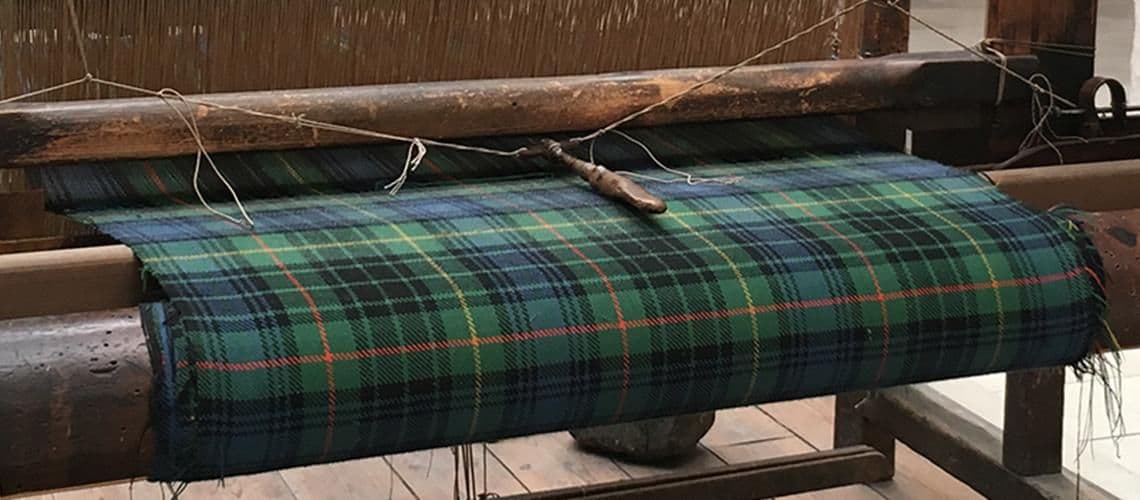
Tartan is one of the most recognisable textiles in the world, instantly associated with Scotland, heritage and identity. But despite its strong modern links to clans and tradition, tartan’s origins are far older — and far less formal — than most people realise.
Early Origins: Practical, Not Symbolic
The earliest known piece of tartan in Scotland is the Falkirk Tartan, dating back to around the 3rd century AD. Discovered in a peat bog near Falkirk, it shows a simple check pattern made from undyed wool.
At this stage, tartan wasn’t about identity or allegiance — it was purely practical. Early weavers used whatever natural dyes were available locally, meaning colours and patterns varied depending on geography. In short, tartan reflected where you were, not who you were.
The Highland Influence
By the 16th and 17th centuries, tartan had become firmly associated with the Scottish Highlands. The garment most commonly worn was the féileadh mòr (great kilt) — a large piece of tartan cloth wrapped and belted around the body.
Different regions naturally developed their own patterns based on available dyes and weaving techniques. While this created variation, there’s little evidence at this point that tartans were strictly tied to specific clans.
That idea came later.
The Tartan Ban & Romantic Revival
Following the Jacobite Rising of 1745, the British government attempted to suppress Highland culture. The Dress Act of 1746 banned the wearing of tartan (except in the military), effectively pushing it underground for nearly 40 years.
Ironically, this ban helped cement tartan’s cultural significance.
When the ban was lifted in 1782, tartan returned — but this time with renewed meaning. What followed in the early 19th century was less of a continuation and more of a reinvention.
Writers like Sir Walter Scott played a major role in romanticising Highland culture. His organisation of King George IV’s visit to Scotland in 1822 encouraged the idea that each clan had its own distinct tartan — whether historically accurate or not.
This is where the “clan tartan” concept really took hold.
The Rise of Clan Tartans
During the 19th century, manufacturers and historians began cataloguing tartans, assigning specific patterns to clans and families. Some were based on older regional designs — others were newly created to meet demand.
Publications like the Vestiarium Scoticum (though controversial in authenticity) helped formalise this system, and tartan became a powerful symbol of identity, heritage and belonging.
Tartan Today: Tradition Meets Style
Today, tartan has moved far beyond kilts and clan gatherings. It’s used across fashion, interiors and accessories — from scarves and ties to jackets, blankets and handbags.
At its core, though, tartan still carries that original blend of place, craftsmanship and story.
Whether you wear your clan tartan or simply choose a pattern you like, you’re part of a tradition that’s evolved over centuries — shaped as much by myth and reinvention as by history itself.